The villages adopted by Baba Nanak Education Society (BNES) in Punjab, and thus the families adopted by you, face constant vulnerabilities of weather changes. Most recently, the stress is elevated, per our recent reports from the ground. The families you support count on your continued assistance, to help them withstrand vulnerability upon vulnerability. Especially when, as you'll note in the update below, the government experts are often projecting an image (and even policy proposals!) that are quite disconnected from the ground reality!
BNES notes:
"Our village lanes are still muddy from last week's heavy rain, and we read that more rain is likely ... Some of our villages are prone to waterlogging even when rain is moderate. They are mainly close to the river Ghaggar from starting from Makror Sahib and going on past Khanauri. The situation is generally soggy in Mandvi, Chandu, Bushehra, Shergarh, Shahpur Thedi, Nawagaon, Banarasi, Andana, Chatha Gobindpura, Phulad, Hamirgarh, Bhundar Bhaini, Surjan Bhaini and Salemgarh. Here's a map showing the problem area...
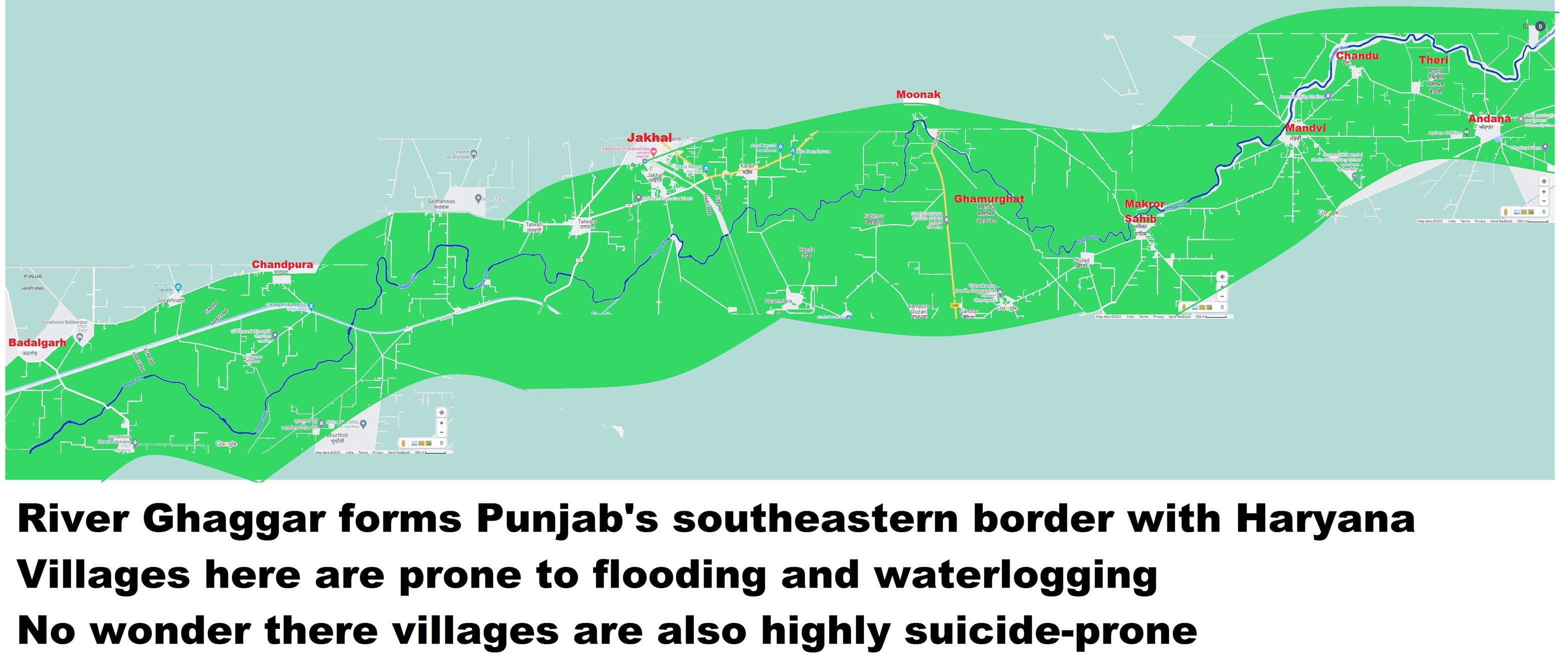
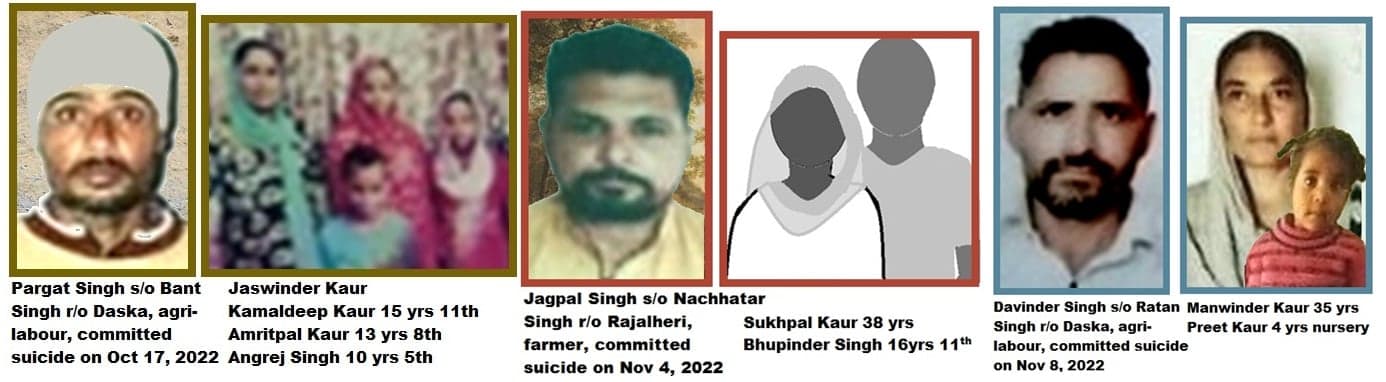
If the weather gods smile, these villages produce good harvests because the soil is fine, light alluvial deposit. But they also invariably suffer the worst crop damage when heavy rains hit. It's no mystery why suicide rate is especially high in these villages.
Vagaries of weather, animal and crop disease outbreaks, extreme market fluctuations, debt burden, family expectations ... where to turn when the pressures become unbearable? For sure, God is closer to us than the government."
Meanwhile, notes BNES, melas and festitivities continue, speaking about a lot of these farming families in the abstract...
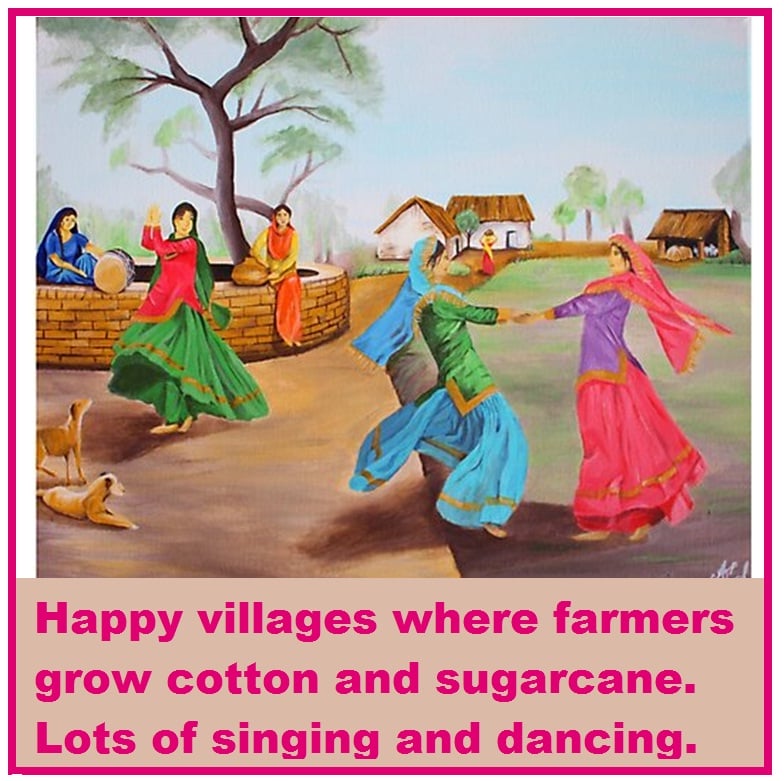
"PAU's annual Kisan Mela was held earlier this week. It was inaugurated by Punjab Vidhan Sabha Speaker Kultar Singh Sandhwan with PAU Vice Chancellor Dr Satbir Singh Gosal as the guest of honour.
Several dignitaries shared their valuable thoughts but the most interesting was Dr Gosal's suggestion that Punjab farmers diversify to cotton and sugarcane. He noted that in decades past, these crops were widely grown in the Malwa belt. Probably Dr Gosal was speaking theoretically.
Cotton is not seen in our area now. Farmers bitterly recall their struggles with white fly and pink bollworm and fake BT cotton seed. PAU will have an uphill task persuading farmers around here to risk growing cotton again.
As for sugarcane, it's a water-guzzling crop: about 20,000 litres of water is needed to produce one quintal of cane. Nearly all of Sangrur district is in what is called "the dark zone" of dangerously depleted watertable.
It's a high-cost crop -- it's a long duration, non-mechanised and labour intensive in a time of labour scarcity, requires at least five operations from manual planting to propping, application of weedicide and pesticide and finally manual harvesting, it takes only a couple weeks of excessive rain and high humidity to see an attack of red rot wipe out the crop.
Farmers not just in Punjab but all over India, have starved while the sugar mills held on to their payments. There are cases before the Punjab and Haryana High Court right now asking justice to farmers on this very issue. This is surely the biggest obstacle to promoting sugarcane cultivation.
From a mill owner's point of view, they say that they are squeezed between the fixed State Approved Price at which they must buy, and the control price at which they must sell. During the covid years the mills were closed for want of labour. India exports a lot of sugar but the international market is notorious for prices that soar and plunge without warning. Moreover, export is not an option for Punjab mills because by the time sugar is transported from Punjab to Mumbai and then shipped abroad, there's no profit left.
By the way, I've always wondered about the description "cooperative sugar mill". To the best of my knowledge they are all owned by politicians or politically connected people. Where does the "cooperative" element come in?"
Policy change is necessary. Pie-in-the-sky ideas are at best disrespectful to the families we support, and at worst very dangerous!


.jpg&w=3840&q=75)
.jpg&w=3840&q=75)