The UN estimates that it will take nearly 300 years to achieve gender equality. We aim to improve access to justice for survivors of gender-based violence (GBV) by strengthening elements of the justice system, including healthcare systems and the courts, that are currently undermined by gender bias and discrimination.
In order to do this, we focus on increasing access to information and data literacy so that our local partners are armed with evidence to support their advocacy. Limited access to information is a barrier to accountability in the justice sector, and makes it difficult to identify where systemic discrimination exists.
In Jamaica, with our partner Jamaicans for Justice (JFJ), we recently co-designed a retrospective analysis project which supports data literacy. JFJ, as one of the leading CSOs in the country, collected intake forms from several local CSOs, redacted sensitive information, and transferred it to ICAAD for analysis. We then created a methodology to identify where gaps in service delivery for GBV survivors were occurring by taking the qualitative intake data and converting it to quantitative data.
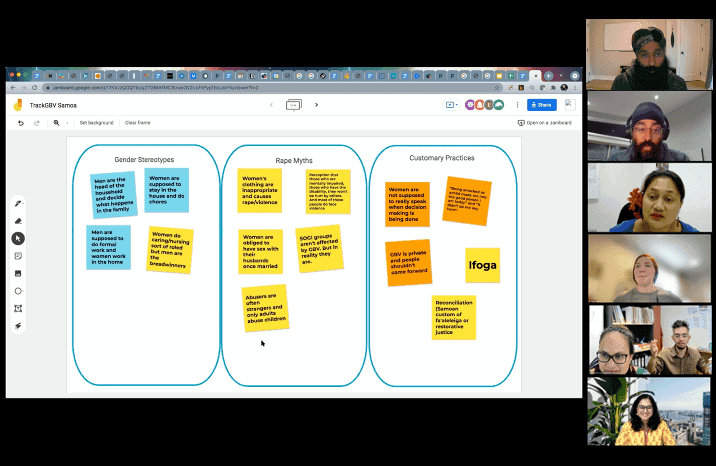
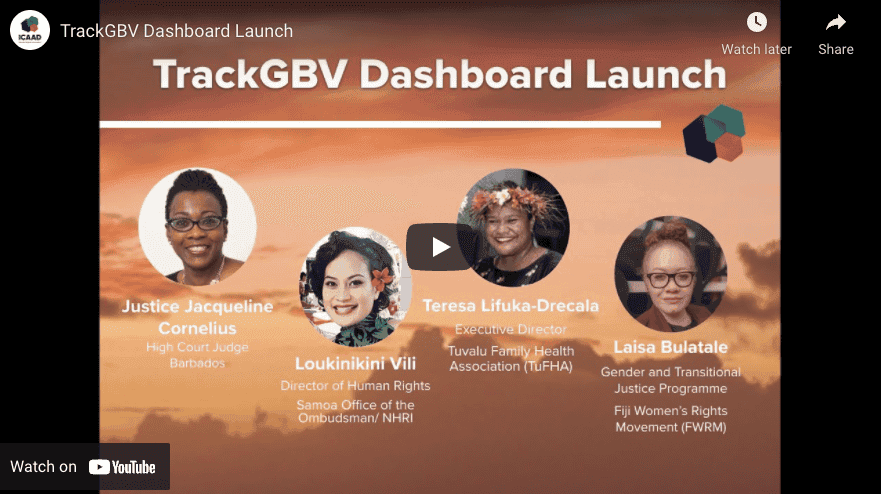
The project is just the beginning of a pilot program that will seek to unlock CSO and government data in the Caribbean. Expanding TrackGBV in the region will help provide accessible information about how bias and discrimination impact the user experience of GBV victims as they interact with the judiciary, healthcare services, and law enforcement. Armed with data, CSOs and governments will be able to work towards a common goal of strengthening access to justice through better service delivery.









.png&w=3840&q=75)