ICAAD recently consulted with the Solomon Islands Chief Justice and Chief Magistrate Emma Garo to discuss the latest TrackGBV data and advance recommendations. As a follow up to the meeting and at the request of the Chief Justice and Chief Magistrate, ICAAD prepared a memo on Improving Access to Justice in the Solomon Islands, and they went on to present at the July 2024 judges meeting.
Some of the data we provided in the memo included the following:
- Despite political will to address gender inequality and high rates of gender-based violence (GBV) in the Solomon Islands, critical gaps remain. One of those gaps is justice sector service delivery unhindered by gender bias and stereotypes.
- Though many sectors of government are involved in addressing GBV, a fair and unbiased judicial system is essential for victims/ survivors achieving accountability and redress in GBV cases. However, in many countries, including the Solomon Islands, judicial sentencing decisions based on biased reasoning, gender myths, and factors irrelevant to the perpetrator’s violent offending are all too common and interfere with the administration of justice. These factors are also out of step with regional and international best practices.
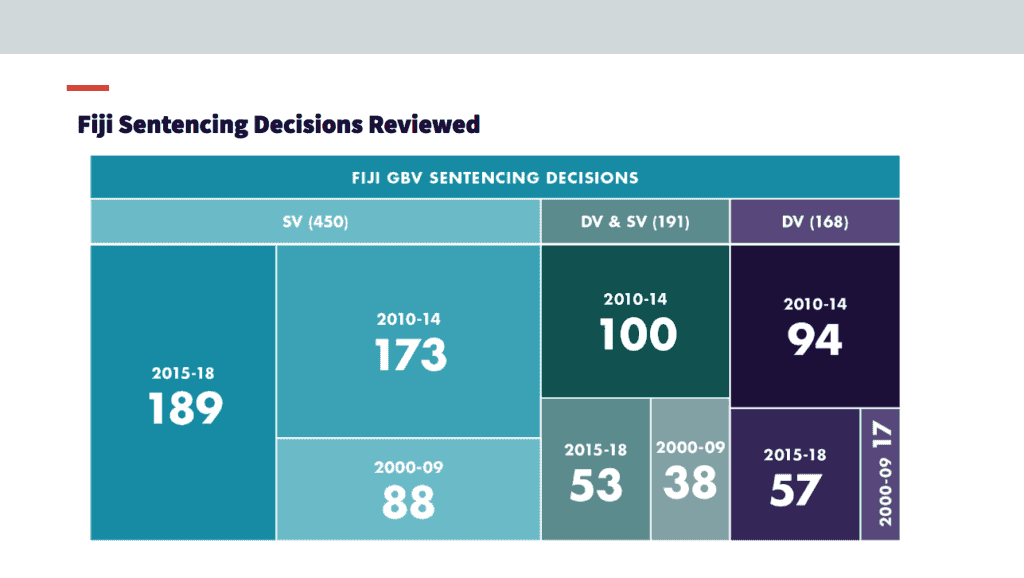
- ICAAD’s TrackGBV program reveals the links between bias in judicial systems, limited access to justice, disproportionately low sentences in GBV cases, and the societal acceptance of GBV by analysing GBV sentencing decisions from 2000-2023.
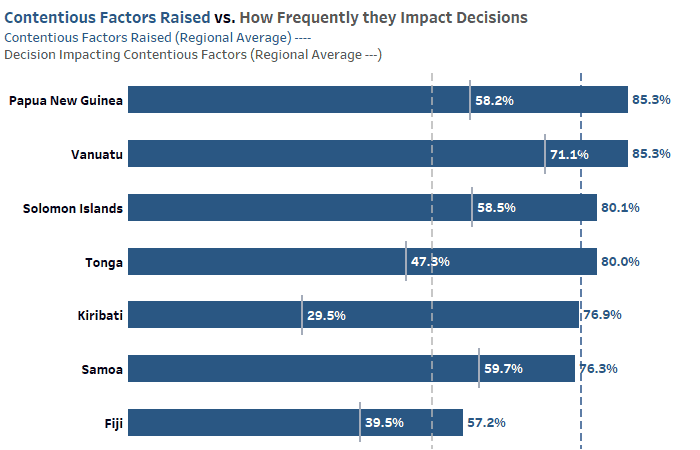
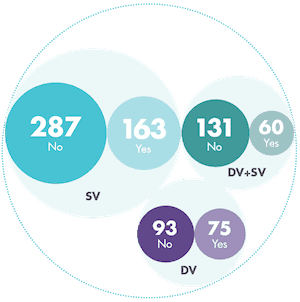
- In the Solomon Islands, GBV cases from 2015 to 2023, judicial officers raised gender stereotypes (e.g. victim-blaming) in sentencing in over 1 in 4 cases (26%). Additionally, the “sole breadwinner argument” was used to reduce sentences in over 1 in 3 (37.5%) domestic violence cases from 2015 to 2023.
- The average sentence reduction due to contentious factors (gender stereotypes, customary practices, or other contentious factors) in cases similar to rape in the same time period was 1.7 years.














.png&w=3840&q=75)