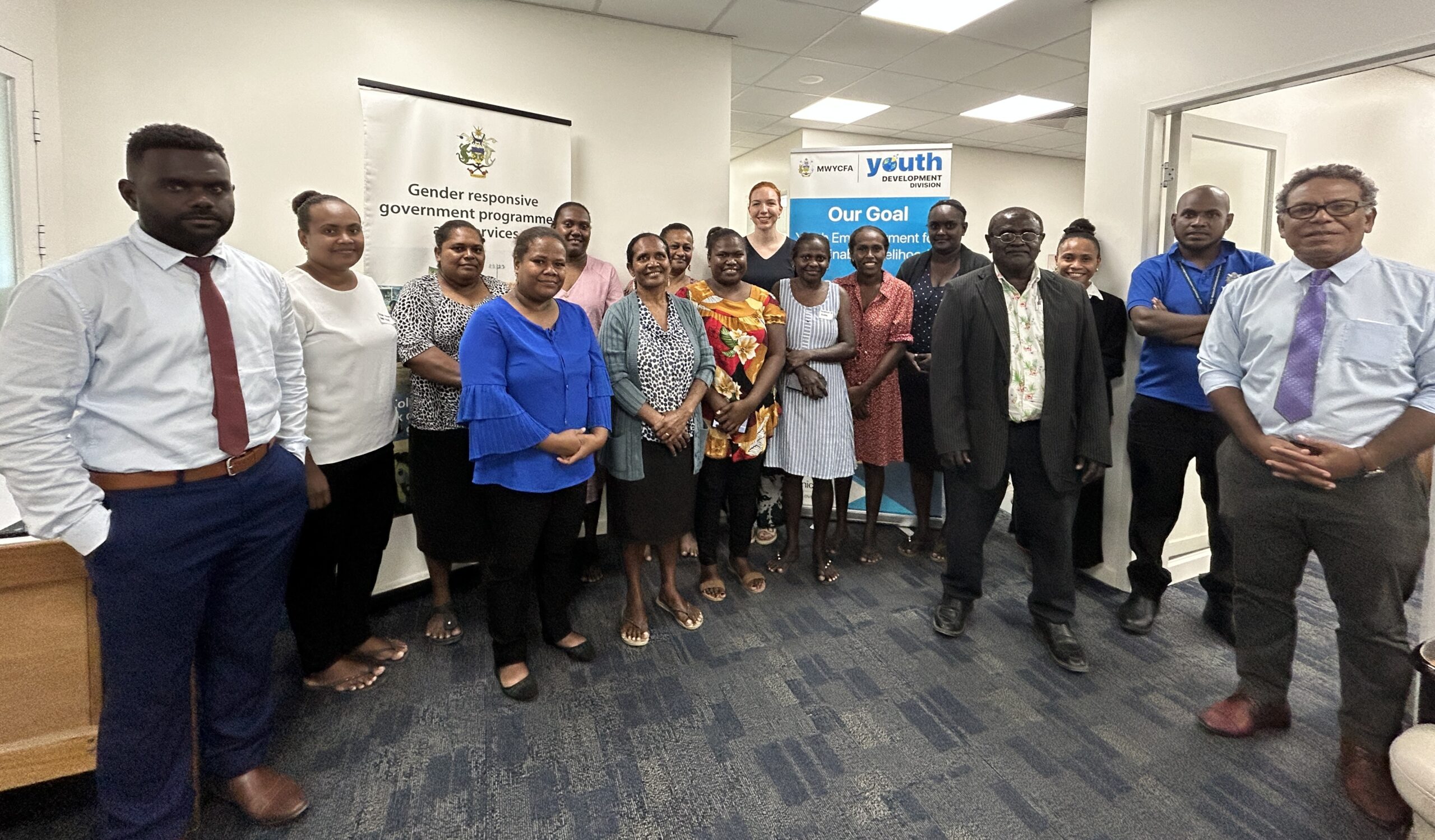
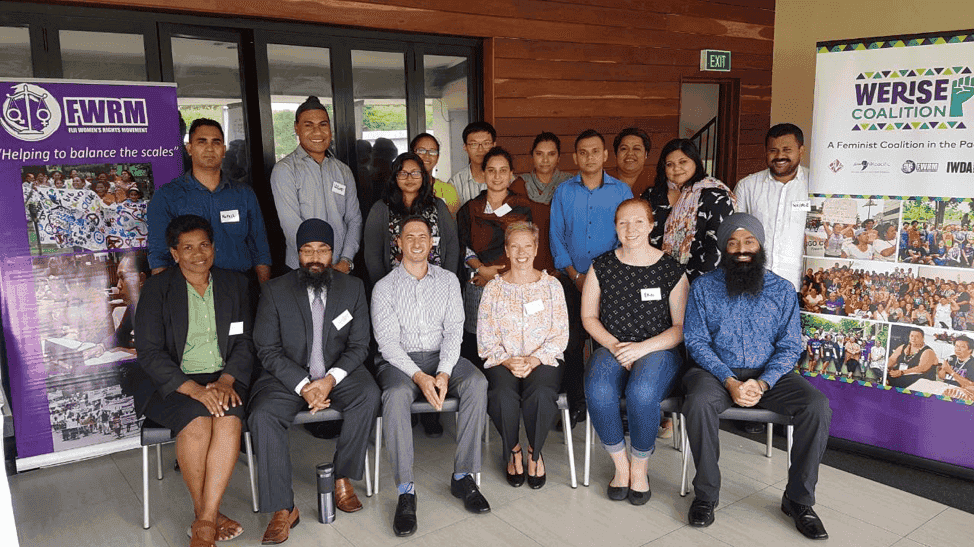
From 8-10 May 2024, 20 representatives from SAFENET, the Solomon Islands gender-based violence (GBV) referral network, came together for a Train-the-Trainers program focused on how gender bias and discrimination manifest in the justice system and how to address this to better support victims/ survivors of GBV.
The program, “TrackGBV Solomon Islands: Improving Access to Justice for Gender-based Violence Cases”, was facilitated by ICAAD and hosted by the Ministry for Justice and Legal Affairs (MJLA) and the Ministry for Women, Youth, Children, and Family Affairs (MWYCFA). This training was co-funded by the Clifford Chance Foundation, and lawyers from Clifford Chance LLP also contributed numerous pro bono hours to reviewing cases for the analysis and additional legal research.
At its core, TrackGBV monitors justice sector service delivery through technology and legal analysis to support capacity development for civil society and government agencies to improve outcomes for survivors. One of the TrackGBV initiatives is designed to improve access to justice for women and girls by revealing the court’s reliance on gender stereotypes, customary practices, and myths that undermine accountability and redress for survivors in GBV cases. The program features a public-facing TrackGBV Data Dashboard (“Dashboard”) which allows for greater transparency among the many stakeholders invested in the sentencing of GBV cases.
Part I: Exploring the Data
In his opening remarks, Permanent Secretary for MJLA, George Hoa’au, shared:
“Data is very important in this day in age. We use it to measure what it is we must do. In the absence of data, it’s difficult to improve accountability, transparency, and consistency in the formal justice system.”
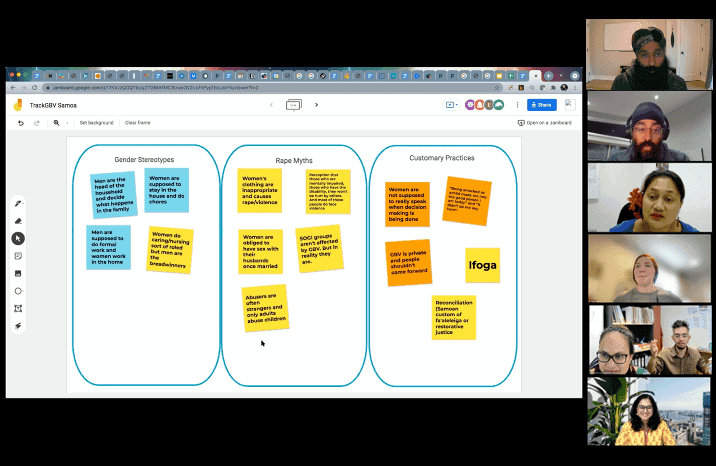
In the first part of the training, participants workshopped new strategies for training teams on the concepts of gender, gender-based violence, and discrimination. They explored the broad human experience of survivors’ access to justice journey and dove into the latest Dashboard data for Solomon Islands, including the most recent 110 cases from 2021-2023 that have been analyzed and were uploaded to the TrackGBV Dashboard in May 2024.
Key Data Insights
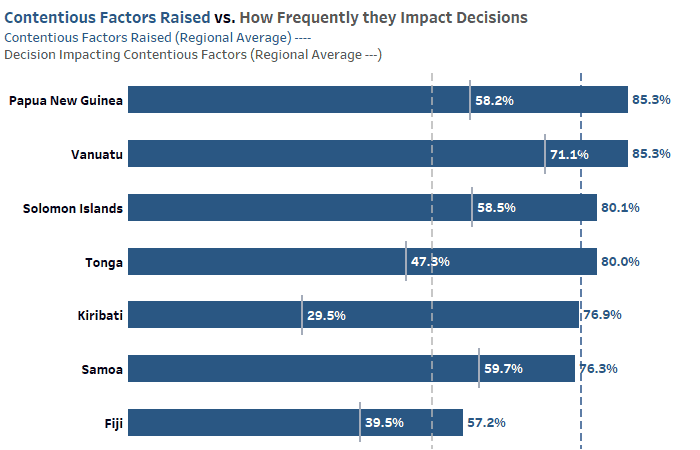
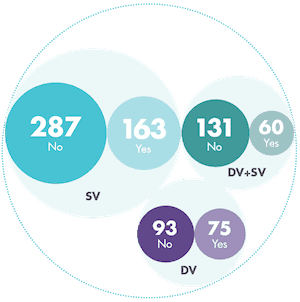
- In GBV cases from 2015 to 2023, judicial officers raised gender stereotypes (e.g. victim-blaming) in sentencing in over 1 in 4 cases (26%).
- For example, the “sole breadwinner argument” was used to reduce sentences in 1 in 3 (33.3%) domestic violence cases from 2015 to 2023.
- “First time offender” status often garners a high sentence reduction. In 2015-2023 cases in which the court applied this status, 24.3% of cases featured evidence of past violence that was never prosecuted.
- The average sentence reduction due to contentious factors (gender stereotypes, customary practices, or other contentious factors) in cases similar to rape in the same time period was 1.7 years.
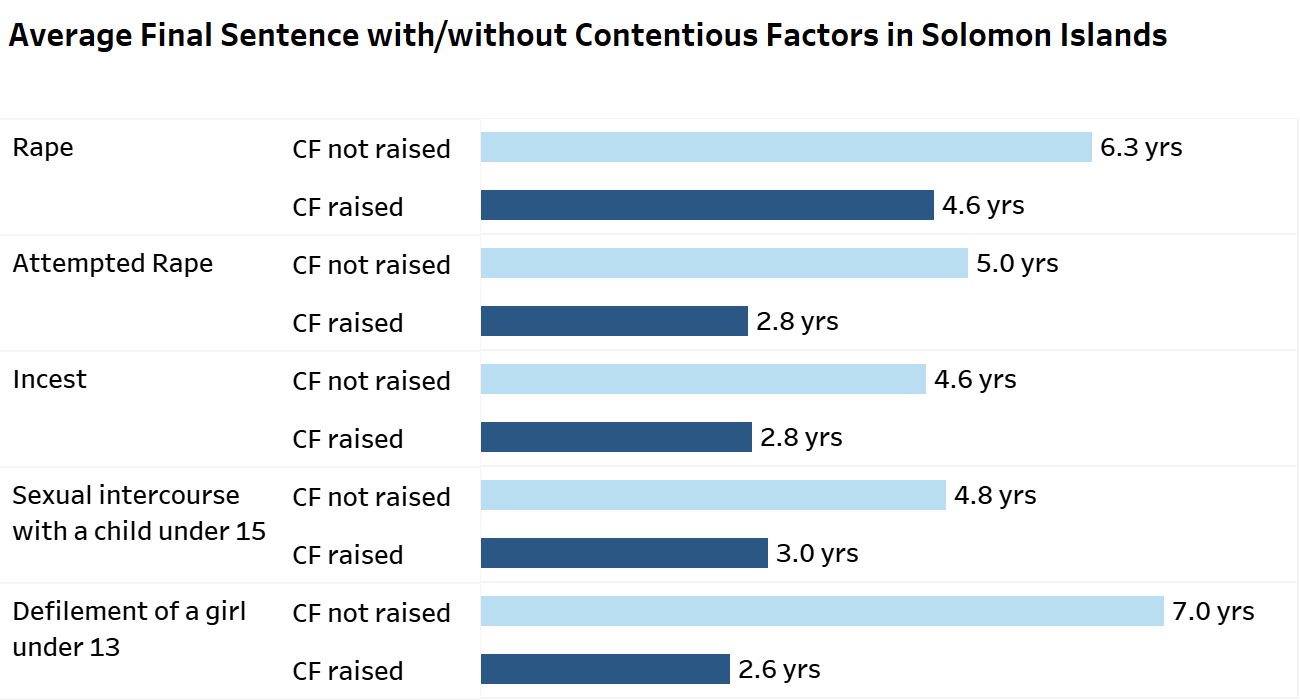
This data and more can be found in our recent Policy Brief and on the Dashboard.
Reviewing the data and placing it in the broader access to justice journey prepared participants to take a systems approach to the issue of GBV.
As shared by one participant, Jimmy Mathew Masura (Immigration Officer, Human Trafficking): “This program really highlighted the different experiences faced by victims/ survivors of GBV in the courts. We should treat everyone the same, and I must be an advocate for equitable outcomes.”
Part II: Developing Recommendations
In the second part of the training, participants developed a set of policy recommendations based on the TrackGBV and their own insights across the SAFENET. The cohort’s recommendations were shared with key stakeholders.
Participants highlighted the need for safety, non-discrimination, human rights, survivors’ needs, confidentiality, respect, and trust to underpin the sentencing of GBV cases. Some of the recommendations include (full set available in the Policy Brief):
- Develop a Sentencing Bill with specific guidelines for sentencing ranges for gender-based violence offences (rape, domestic violence, etc.).
- Eliminate the use of gender stereotypes in sentencing, particularly victim-blaming and myths that result in gender-based discrimination when applied in mitigation.
- Eliminate the use of the sole breadwinner argument as a mitigating factor in GBV cases given the After Care Support for Prisoners’ Families offered by the Social Welfare Division.
- Increase funding to the Social Welfare Division to meet the needs of families of prisoners through the After Care Support for Prisoners Families program and ensure survivors and their families are made aware of this support.
- In cases in which the sole breadwinner faces a custodial sentence, judges should advise victims/ survivors of the support available to them from Social Welfare.
- Clearly define first-time offender status, so that this mitigating factor is not applied when there is evidence or credible testimony to indicate that there was a previous pattern of offending.
- Eliminate the use of customary practices (example reconciliation and compensation) as a mitigating factor in GBV cases.
- Build the capacity of health and legal professionals to handle, present, and interpret medical evidence in GBV cases through a medico-legal train-the-trainers program.
Almost every participant increased their motivation and sense of efficacy in their efforts to increase access to justice for victims/ survivors of GBV. Participants were also eager for SAFENET data to be centralized to allow members to identify weak links in the access to justice journey and to highlight areas that need additional resourcing.
The Chief Legal Policy Officer, Ministry of Justice and Legal Affairs Legal Policy Unit, Kyla Venokana, shared, “This training helped me understand the final stage of the access to justice journey for reported cases. It was really interesting to learn the TrackGBV methodology for reviewing cases. This learning will undoubtedly support our legal policy reform work on GBV legislation.”
ICAAD’s Director and Change Facilitator, Erin Thomas, who facilitated the training, shared: “It was really exciting to facilitate such an energised group. It goes to show how engaged the SAFENET partners are. There is a lot of momentum here for change across sectors. If key decision makers heed these evidence-based recommendations, we will have taken a massive step towards improving access to justice in the Solomon Islands.”
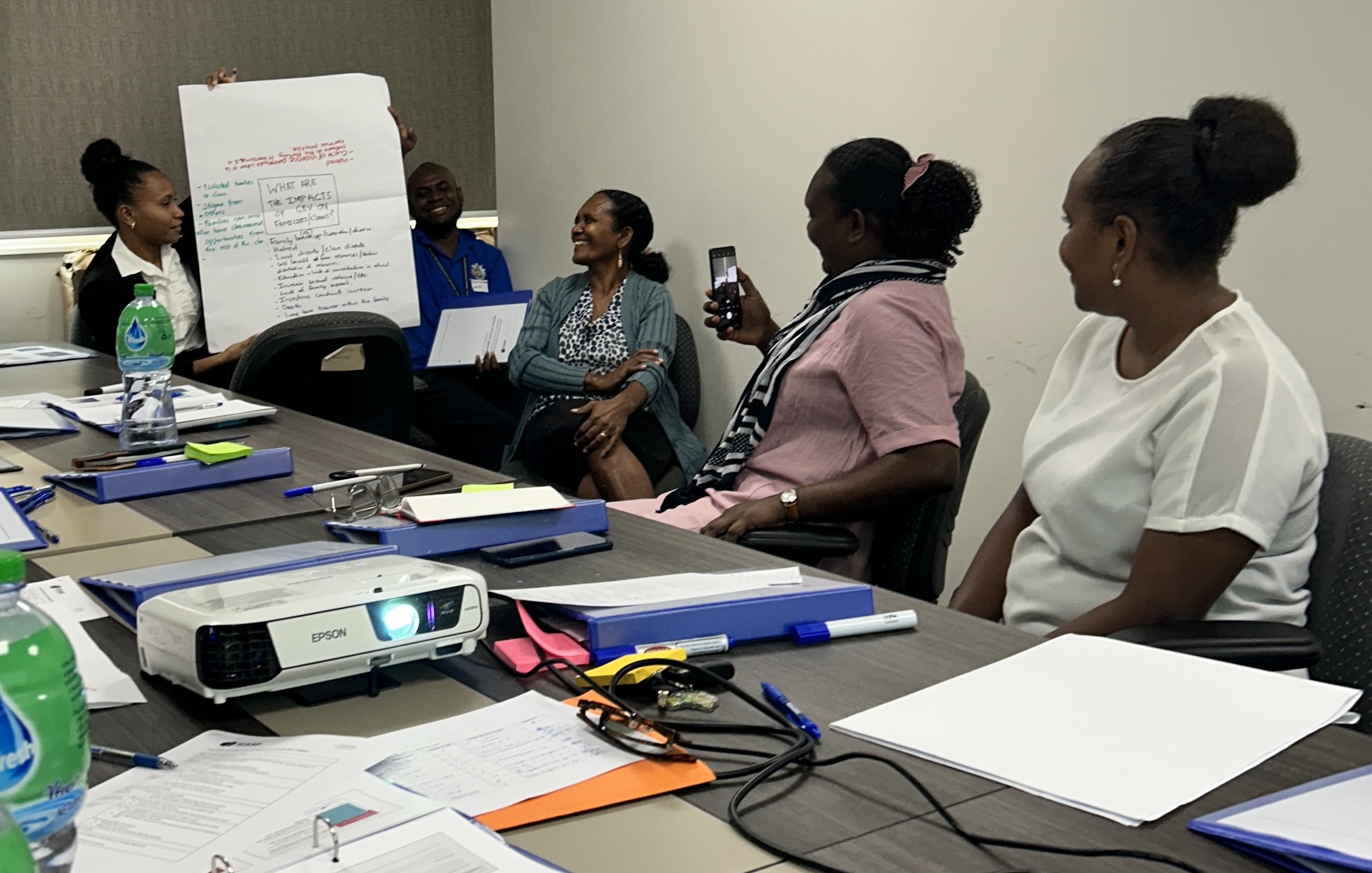
Participants represented the following organizations and agencies:
- Ministry for Women, Youth, Children and Family Affairs
- Honiara City Council
- Ministry for Justice and Legal Affairs
- National Referral Hospital
- Seif Ples
- Social Welfare Division
- Office of the Director of Public Prosecutions
- Hope Trust
- Ministry of Commerce, Industry, Labour, and Immigration
- Solomon Islands Planned Parenthood Association








.png&w=3840&q=75)